

Engineer Your Story with AI
![Engineer Your Story with AI [photograph]](https://www.ideasfoundation.org.uk/wp-content/uploads/2026/03/Engineer-Your-Story-with-AI-3-2.webp)
Queen Mary University of London × Ideas Foundation
How AI, creativity and healthcare research came together to inspire the next generation.
About the Project
Funded by the Convocation Trust, this ground-breaking initiative brought together Queen Mary University of London and Ideas Foundation to inspire the STEAMM community, showcasing diverse women as role models and encouraging students to explore careers in AI and healthcare.
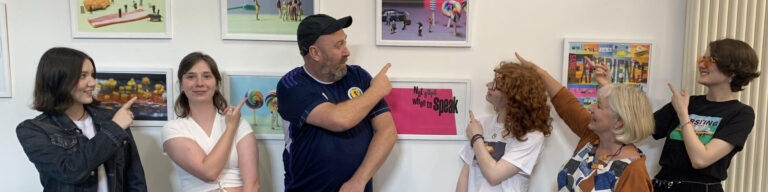
Thirty Year 10 students from City Academy Hackney took part in a hands-on creative workshop exploring how artificial intelligence is being used in healthcare research, giving them direct access to researchers, creative professionals and real-world examples of how AI is transforming healthcare.
The programme was designed to show students how AI tools can build confidence, support research, advance inclusivity and strengthen employability, while opening a window into some of the most exciting medical science being done today. In parallel, lectures in storytelling and AI tools were offered to all 600 engineering undergraduates in an event held in the Great Hall at the Mile End Campus of Queen Mary University of London.
Queen Mary University of London is going out of its way to enrich and extend the learning and employability of their students. Storytelling, AI and engineering might not seem like obvious companions, but as students seek work, they are going to have to tell their own stories with conviction. They are going to have to convince funders and customers to invest in their ideas.
Heather MacRae, Executive Director, Ideas Foundation:
For the City Academy Hackney students, the workshop created a rare opportunity to engage directly with leading researchers and creative professionals, helping them see how skills in creativity, technology and storytelling can connect to real careers in healthcare research.


A Day as Creative Directors
Celebrating National Careers Week, students stepped into the roles of creative directors for the day, interviewing six clinicians and scientists from Queen Mary’s Centre for Bioengineering and translating complex research into visual stories, including visiting researchers Dr Zara Arain Sqlan, Anya MacLaren, Bianca Viljoen, Amelia Art and Natalia Munro Castro. Researchers shared insights into their work on digital twins, air pollution, menopause, preterm birth and saving babies’ lives.
Students explored questions including how researchers use AI in healthcare, what opportunities AI creates for improving patient care, the ethical questions around AI technologies, and the career journeys that led researchers into their fields.
From Research to Creative Storytelling
Armed with notes and ideas from their interviews, students created prompts and used AI tools to generate headlines and text. In a hands-on photography session led by Eliška Sky, they developed mood boards, shot lists and design concepts, experimenting with lighting, colour, props and portraiture to create images that reflected the personalities and work of the researchers.
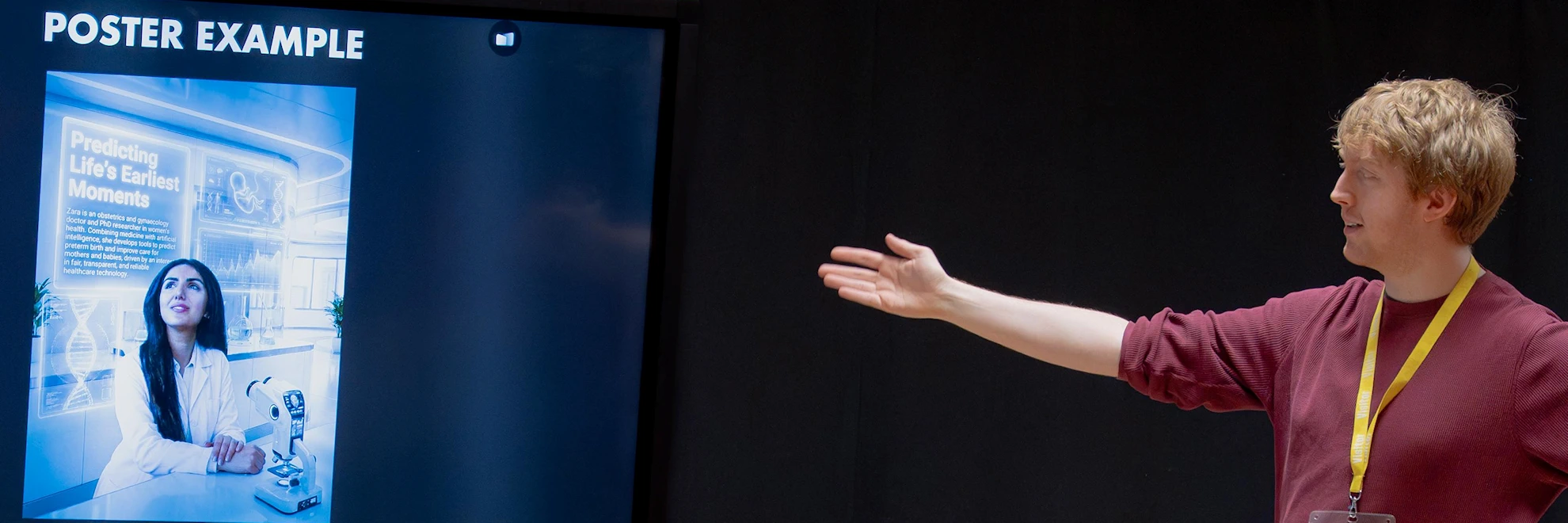
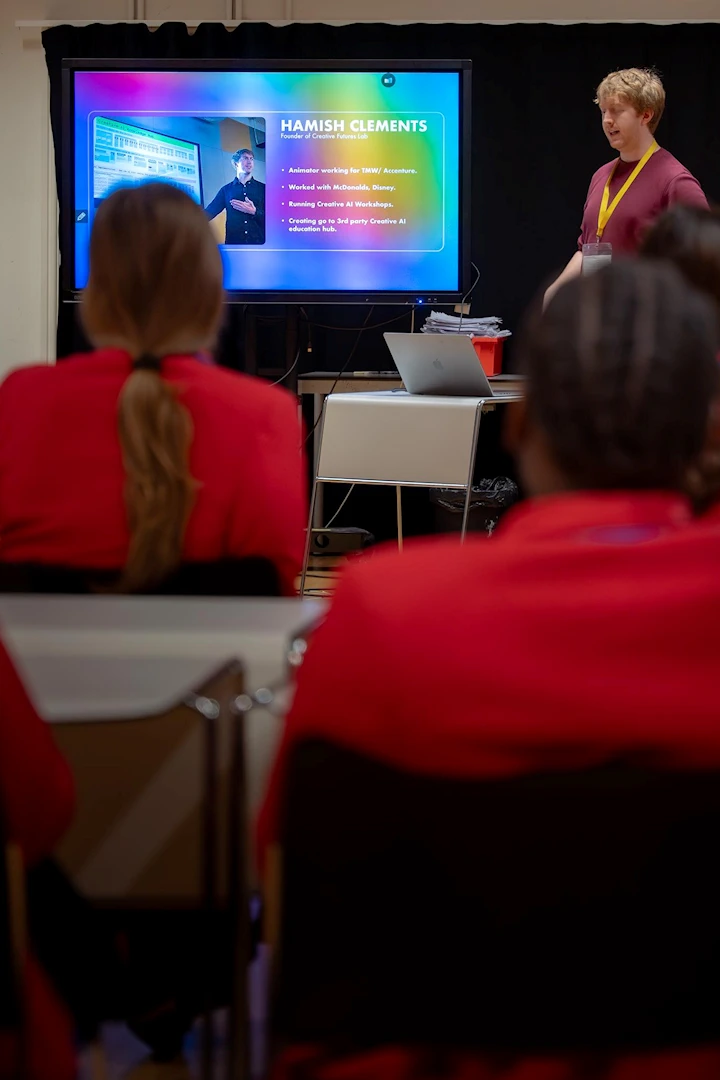
Creative technologist Hamish Clements then demonstrated how AI tools can generate infographics and visual content, helping students translate complex research insights into accessible, engaging campaign posters designed to communicate cutting-edge health research to a wider audience, across a range of live research themes:
- Cardiovascular Disease and digital twins
- Air Pollution & Pregnancy
- Organ-Chip Models
- Preterm Birth
- Menopause.
Working in creative teams, students transformed these complex research themes into visual campaign ideas designed to help other young people understand how AI is shaping the future of healthcare.
As well as exploring the positive potential of AI, students examined how these tools can spread misinformation and how biased datasets can undermine the quality of research. Through this process, students developed a more critical understanding of both AI technologies and the role creativity can play in communicating complex research responsibly.
Over the years, I have seen how technology has changed at pace, affecting our behaviour and future health. I am proud to be a part of the AI revolution — bringing multi-disciplinary fields in creativity, STEAMM and AI together, creating bold campaigns with the Ideas Foundation to change how we behave, breathe and live. I believe one day there will be health equality for all.
— Dr Tina Chowdhury, Centre for Bioengineering, Queen Mary University of London
Gallery of Student Work
![by Zara [poster]](https://www.ideasfoundation.org.uk/wp-content/uploads/2026/03/Zara-poster.webp)
![Shaping the Future of Heart Care (by Amelia) [poster]](https://www.ideasfoundation.org.uk/wp-content/uploads/2026/03/Shaping-the-Future-of-Heart-Care-Amelia-poster.webp)
![Go Green, Breathe Clean (by Tina) [poster]](https://www.ideasfoundation.org.uk/wp-content/uploads/2026/03/Go-Green-Breathe-Clean-Tina-poster.webp)
![Life on a Chip (by Natalia) [poster]](https://www.ideasfoundation.org.uk/wp-content/uploads/2026/03/Life-on-a-Chip-Natalia-poster.webp)
![Predicting Life's Earliest Moments (by Zara) [poster]](https://www.ideasfoundation.org.uk/wp-content/uploads/2026/03/Predicting-Lifes-Earliest-Moments-Zara-poster.webp)
![Discovery is Creativity (by Anya) [poster]](https://www.ideasfoundation.org.uk/wp-content/uploads/2026/03/Discovery-is-Creativity-Anya-poster.webp)
![Smart Data, Safe Deliveries (by Zara) [poster]](https://www.ideasfoundation.org.uk/wp-content/uploads/2026/03/Smart-Data-Safe-Deliveries-Zara-poster.webp)
![AI for Her (by Bianca) [poster]](https://www.ideasfoundation.org.uk/wp-content/uploads/2026/03/AI-for-Her-Bianca-poster.webp)
The Creative Team
Five exceptional practitioners brought the programme to life:
Sue Nelson | Science Journalist & Broadcaster
An award-winning broadcaster, writer and science journalist. Sue co-hosts the Space Boffins and Counting the Earth podcasts, makes short films on science, and produces and presents radio documentaries for BBC World Service.
Greg Hodgson | Creative Tech Expert
Founder of Edge Gain and an Adobe partner, Greg uses cutting-edge tools to enhance creative work for research and professional practice, helping students unlock the power of AI in their own storytelling.
Eliška Sky | Photographer & Filmmaker
A contemporary Czech photographer and filmmaker based in London. Her bold, vivid work has taken her from National Theatre Prague to Dubai Expo 2020. Her Womaneroes series was featured in the British Journal of Photography.
Hamish Clements | AI Creative Director
Founder of Creative Futures Lab and a creative working with global brands, Hamish guided students in using AI image and video tools, showing how technology and imagination combine to produce compelling visual campaigns.
Heather MacRae | Creative Education Consultant
Founder of Venture Thinking, and until recently CEO of Ideas Foundation, Heather brings together experts to create and deliver innovative education workshops. Heather has a long standing connection with QMUL where she is an Honorary Fellow.
What Comes Next
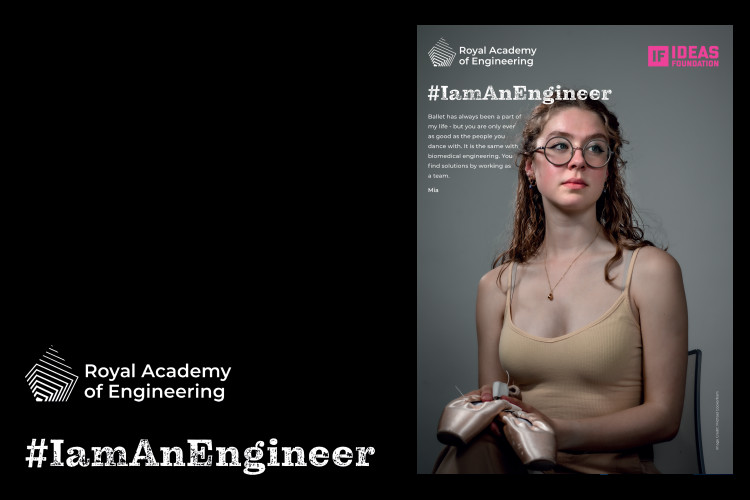
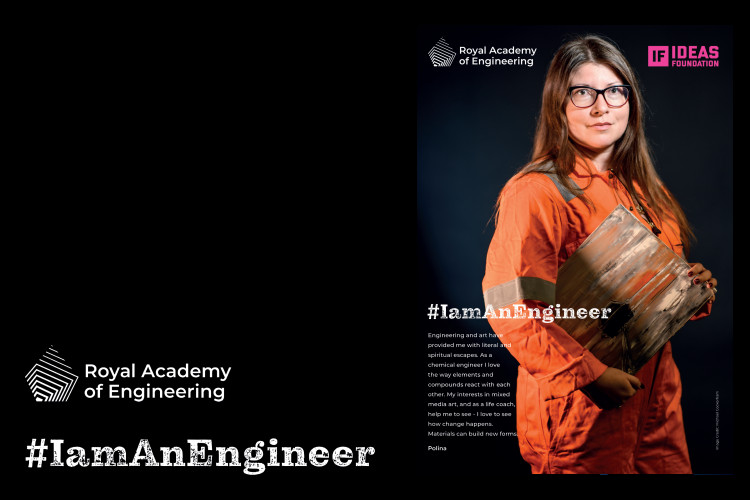
The workshop builds on earlier support from the Royal Academy of Engineering, which helped pilot this creative approach to engaging young people with engineering and technology. By connecting young people directly with researchers, creatives and emerging technologies, the programme helps broaden awareness of future pathways in healthcare, engineering and the creative industries. Student work will be showcased by Queen Mary University of London at forthcoming conferences on public engagement and on social media, and students will be invited to visit the university.
By combining creative practice with real-world research conversations, the workshop helped students develop confidence in their ideas while exploring new ways their interests could connect to future opportunities in science, technology and the creative industries.
The workshop was amazing. It’s really leading edge in so many ways — the research, the AI tools — and I am so proud of the work that the students produced.
— Valine Bramble, Science Lead, City Academy Hackney

![Ideas Foundation Mentor Training [photograph]](https://www.ideasfoundation.org.uk/wp-content/uploads/2025/04/Ideas-Foundation-Mentor-Training-3-2-768x512.jpg)